

When comparing an air fryer vs deep fryer, many home cooks wonder which appliance is better for health, taste, and everyday use. In this guide, we break down the key differences to help you choose the right option for your kitchen.
An air fryer is generally better for healthier everyday cooking because it uses little to no oil while still producing crispy food. A deep fryer, however, delivers more authentic fried texture and flavor but requires significantly more oil and cleanup. For most home kitchens, an air fryer is the more convenient and health-conscious choice, while deep fryers are better suited for occasional traditional frying.
Air Fryer vs Deep Fryer: Key Differences at a Glance
| Feature | Air Fryer | Deep Fryer |
|---|---|---|
| Cooking Method | Rapid hot air circulation | Food submerged in hot oil |
| Oil Usage | Very little or none | Large amount of oil required |
| Health Factor | Healthier option | Higher fat content |
| Taste & Texture | Crispy but slightly drier | Classic deep-fried taste |
| Cooking Speed | Fast preheat and cooking | Slower heat-up |
| Ease of Cleaning | Easy (nonstick basket) | Messier (oil disposal) |
| Operating Cost | Lower long-term cost | Higher due to oil use |
| Best For | Everyday home cooking | Traditional deep frying |
What Is an Air Fryer?
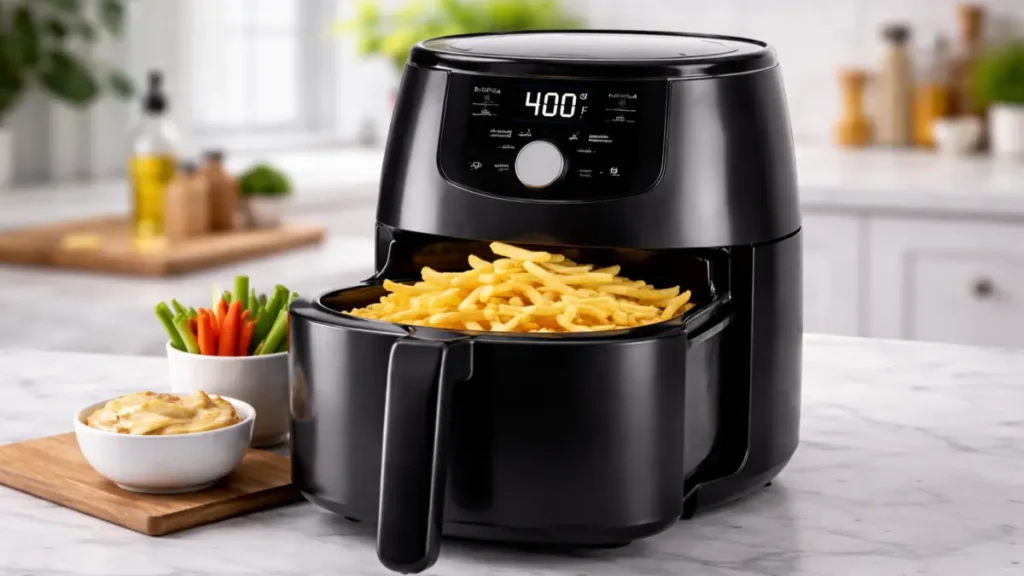
An air fryer is a compact countertop appliance that cooks food by circulating very hot air around it at high speed. This process creates a crispy outer layer similar to frying but with little to no oil.
Air fryers are popular because they:
- Reduce oil consumption
- Cook quickly
- Are easy to clean
- Handle multiple cooking tasks (roasting, reheating, baking)
👉 For a deeper look at top-performing models, explore our guide to the best air fryers for home use, especially if you need larger capacity and dual-basket options.
What Is a Deep Fryer?

A deep fryer is a kitchen appliance designed to cook food by fully submerging it in hot oil, typically between 325°F and 375°F. This method produces the classic golden, crunchy texture associated with traditional fried foods.
Deep fryers are commonly used for:
- French fries
- Fried chicken
- Donuts
- Tempura
- Restaurant-style frying
While they deliver excellent texture, they require more oil, careful monitoring, and more cleanup compared to air fryers.
Air Fryer vs Deep Fryer: Detailed Comparison
Let’s break down the most important differences that matter in real home kitchens.
Health: Which Is Better?
Winner: Air Fryer
Air fryers use up to 70–90% less oil than deep fryers, significantly reducing fat and calorie intake. Instead of soaking food in oil, they rely on hot air circulation and a light oil coating (or none at all).
Deep fryers, by design, fully immerse food in oil, which increases fat absorption and overall calorie content.
✅ Choose an air fryer if health is a priority.
⚠️ Choose a deep fryer only if traditional frying is your goal.
Taste & Texture

Winner: Deep Fryer (slightly)
Deep fryers still produce the most authentic:
- crunch
- golden color
- juicy interior
Air fryers get very close — especially modern models — but the texture can be slightly drier and less uniformly crisp for some foods.
👉 For most home users, the difference is small enough that the health and convenience benefits of air fryers outweigh the texture gap.
Cooking Speed
Winner: Air Fryer
Air fryers typically:
- Preheat faster
- Cook smaller batches quickly
- Require less setup time
Deep fryers must first heat a large volume of oil, which can take longer.
However, deep fryers may cook large batches faster once the oil is hot, which matters for parties or bulk frying.
Cost Comparison: Which Is More Affordable?
Winner: Air Fryer (long-term)
At first glance, both appliances are similarly priced, but the real difference comes in long-term costs.
Initial Cost
- Air Fryers: $50–$200, depending on size and features
- Deep Fryers: $40–$150 for most home models
👉 Both are comparable upfront.
Ongoing Costs
- Air Fryer: Minimal — uses little to no oil
- Deep Fryer: High — requires frequent oil replacement
Cooking oil can become a significant recurring expense, especially if you fry regularly.
Energy Consumption
Air fryers are generally more energy-efficient because:
- Faster preheating
- Shorter cooking times
- Smaller cooking chamber
Deep fryers consume more energy to heat and maintain oil temperature.
Final Cost Insight
Over time, air fryers are more economical due to:
- Lower oil usage
- Less energy consumption
- Reduced maintenance
👉 If you’re budget-conscious, you may also want to explore our guide to budget-friendly air fryers under $150 for cost-effective options.
Ease of Cleaning
Winner: Air Fryer (by a wide margin)
Air fryer cleanup usually involves:
- Removing the basket
- Washing nonstick parts
- Quick wipe-down
Deep fryers require:
- Cooling and storing oil
- Filtering or disposing of oil
- Cleaning oily components
- Managing grease smells
For everyday home use, air fryers are far more convenient.
Pros and Cons of Air Fryers
👍 Pros
- Uses little to no oil (healthier cooking)
- Faster preheating and cooking for small batches
- Easy to clean with nonstick baskets
- Versatile (can roast, reheat, bake, and crisp)
- More energy-efficient for everyday meals
- Less kitchen odor compared to deep frying
👎 Cons
- Slightly less authentic fried texture
- Smaller batch capacity on compact models
- Can be noisy due to the fan
- Learning curve for timing certain foods
Pros and Cons of Deep Fryers
👍 Pros
- Classic restaurant-style crispiness
- Even browning and texture
- Better for large batch frying
- Ideal for traditional fried foods
👎 Cons
- Requires large amounts of oil
- Higher fat and calorie content
- Messy cleanup and oil disposal
- Longer preheat time
- Strong lingering oil smell
- Higher long-term operating cost
When You Should Choose an Air Fryer
An air fryer is the better choice for most home kitchens — especially if you cook frequently and want convenience with healthier results.
Choose an air fryer if you:
- Want to reduce oil consumption
- Cook quick weeknight meals
- Prefer easy cleanup
- Have limited kitchen space
- Want a multi-purpose appliance
- Cook for small to medium households
Power user tip:
If you cook for multiple people regularly, consider the best air fryers for families to get larger capacity and dual-basket options.
When a Deep Fryer Makes More Sense
A deep fryer still has a place in some kitchens — particularly for traditional frying enthusiasts.
Choose a deep fryer if you:
- Want authentic, deep-fried taste every time
- Frequently cook large batches
- Make foods like donuts or tempura
- Don’t mind handling and storing oil
- Prioritize texture over health benefits
For occasional indulgent frying, a deep fryer can still be worthwhile — but most households find air fryers more practical for daily use.
FAQs
Is an air fryer healthier than a deep fryer?
Yes, an air fryer is generally healthier because it uses little to no oil, reducing fat and calorie intake by up to 70–90% compared to deep frying. Deep fryers fully submerge food in oil, which increases fat absorption.
Does food taste the same in an air fryer vs deep fryer?
Not exactly. Deep fryers produce the most authentic crispy texture, while air fryers create a slightly lighter, drier crisp. However, modern air fryers come very close, and many home users find the difference minimal.
Can an air fryer replace a deep fryer?
For most home cooking, yes. Air fryers can handle fries, chicken, frozen foods, and many crispy recipes with far less oil and easier cleanup. However, deep fryers still perform better for certain traditional fried foods.
Which is cheaper to run: an air fryer or a deep fryer?
Air fryers are usually cheaper to run long-term because they use less electricity and require little to no cooking oil. Deep fryers incur ongoing oil costs and typically consume more energy during preheating.
Final Verdict
Choosing between an air fryer and a deep fryer ultimately depends on your cooking priorities.
- Best for everyday healthy cooking: Air Fryer
- Best for authentic deep-fried texture: Deep Fryer
- Best for convenience and cleanup: Air Fryer
- Best for large batch traditional frying: Deep Fryer
For most modern home kitchens, an air fryer offers a better balance of health, convenience, and versatility. However, if you regularly crave classic deep-fried results, a dedicated deep fryer can still earn its place in your kitchen.