
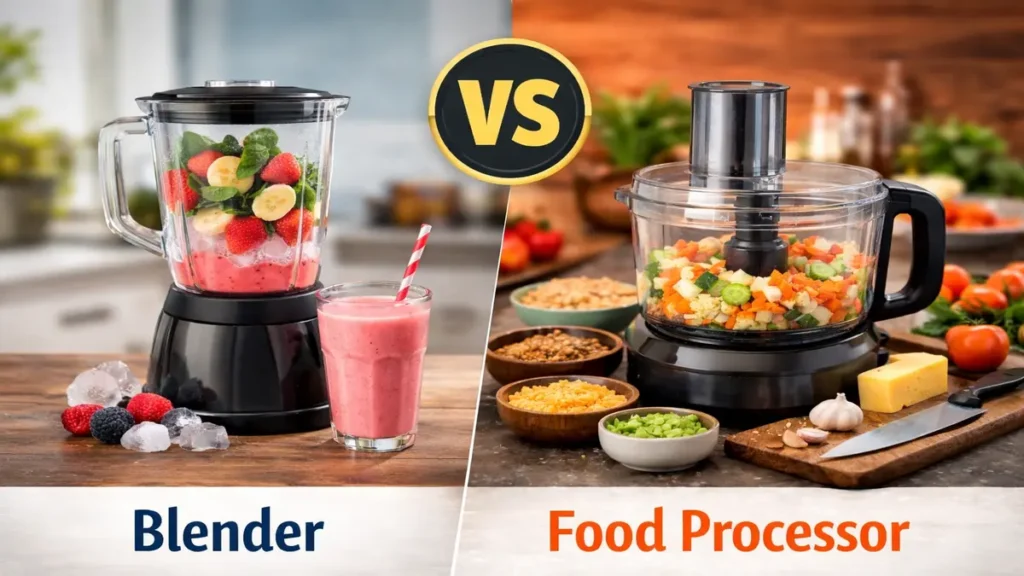
Many home cooks wonder whether they really need a blender, a food processor, or both. While these two kitchen appliances may look similar at first glance, they’re designed for very different tasks. Choosing the wrong one can lead to disappointing results, wasted counter space, and unnecessary expense.
In this guide, we’ll break down the key differences between blenders and food processors, explain what each one does best, and help you decide which appliance fits your cooking habits. Whether you make smoothies daily, prepare meals in bulk, or cook occasionally, this comparison will help you make an informed choice.
Blender vs Food Processor at a Glance
| Feature | Blender | Food Processor |
|---|---|---|
| Best for | Smoothies, shakes, soups, liquids | Chopping, slicing, shredding, dough |
| Texture results | Smooth, pourable | Chunky to coarse |
| Bowl design | Tall and narrow | Wide and shallow |
| Blade type | Fixed blending blades | Interchangeable blades & discs |
| Works best with liquids | Yes | Limited |
| Meal prep tasks | Limited | Excellent |
| Typical use | Drinks & purees | Cooking prep |
Quick takeaway:
- If your goal is smooth drinks or liquid-based recipes, a blender is the better tool.
- If your focus is chopping, slicing, or preparing ingredients, a food processor is the better choice.
What Is a Blender Best Used For?
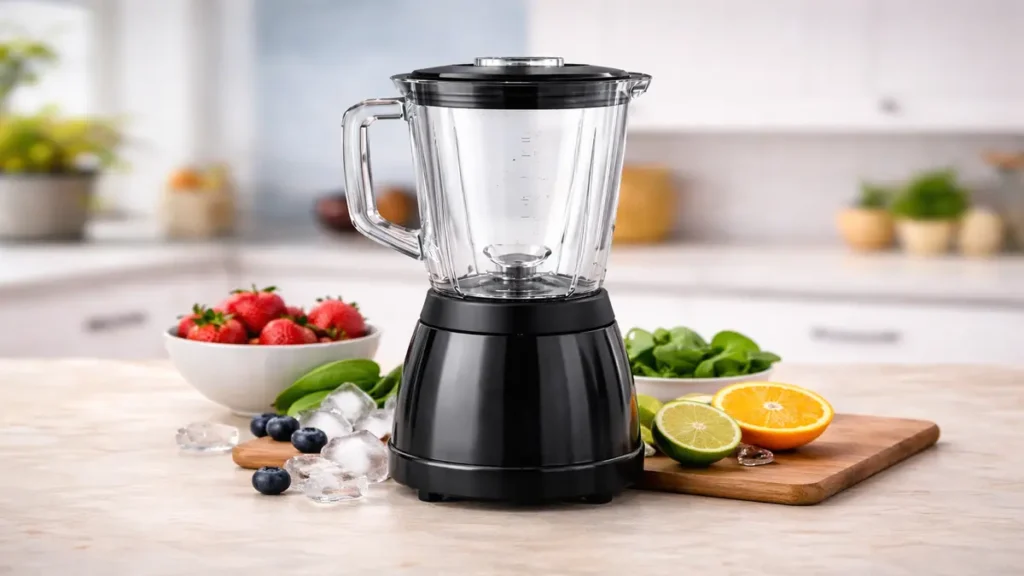
A blender is designed to create smooth, liquid-based results by rapidly spinning fixed blades inside a tall, narrow jar. It works best when ingredients are combined with liquids, allowing everything to circulate evenly during the blending process.
Blenders are ideal for:
- Smoothies and protein shakes
- Frozen drinks and milkshakes
- Blended soups and sauces
- Purees and liquid batters
Because of their jar shape and blade design, blenders excel at turning ingredients into smooth, pourable textures. This makes them the go-to appliance for drinks and recipes where consistency matters.
Where blenders fall short:
- Chopping vegetables evenly
- Slicing or shredding ingredients
- Mixing thick doughs
- Dry food prep without liquid
While some high-powered blenders can handle thicker mixtures, they’re still not designed for detailed food prep tasks.
Bottom line: If you regularly make smoothies, shakes, or blended liquids, a blender is the better and more efficient choice.
What Is a Food Processor Best Used For?
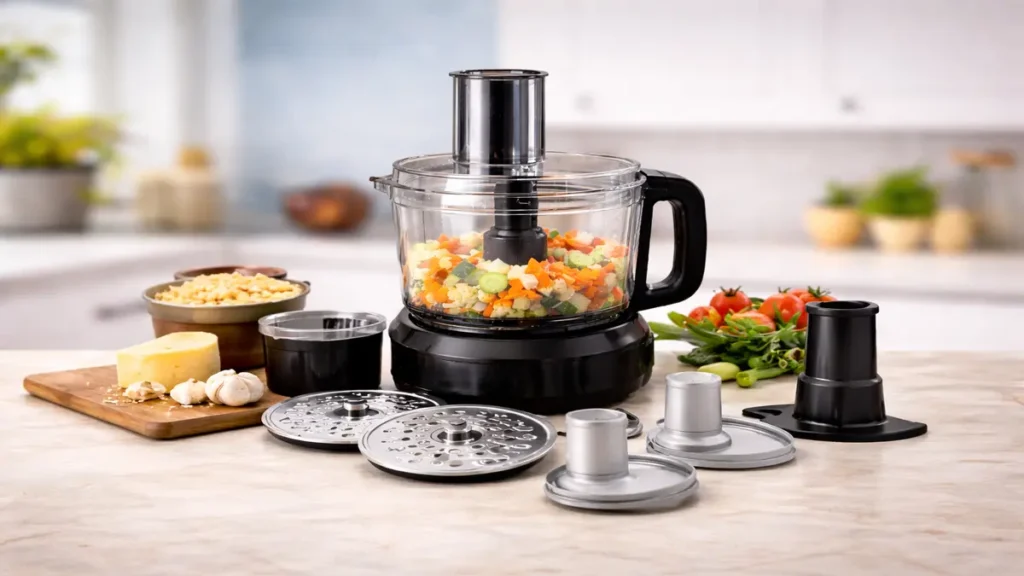
A food processor is designed for preparing solid ingredients, especially when chopping, slicing, shredding, or mixing is required. Unlike blenders, food processors use a wide, shallow bowl and often include multiple blades or discs, allowing them to handle a variety of food prep tasks efficiently.
Food processors are ideal for:
- Chopping vegetables, nuts, and herbs
- Slicing fruits and vegetables evenly
- Shredding cheese or potatoes
- Making dough, pastry, or pie crusts
- Preparing dips like hummus, pesto, or salsa
Because ingredients are spread out in the bowl rather than stacked vertically, food processors produce controlled, textured results instead of smooth blends.
Where food processors fall short:
- Making smoothies or shakes
- Blending liquids smoothly
- Crushing ice efficiently
- Creating pourable textures
While a food processor can mix some wet ingredients, it typically struggles to achieve the smooth consistency that a blender produces.
Bottom line: If your cooking involves frequent meal prep, chopping, or slicing, a food processor is the more practical and versatile choice.
Key Differences Between a Blender and a Food Processor
Although blenders and food processors may seem interchangeable, their design and functionality set them apart. Understanding these differences will make it much easier to choose the right appliance for your kitchen.
Blade Design & Function
- Blender: Uses fixed blades designed to pull ingredients downward and create a vortex. This setup is ideal for blending liquids and producing smooth textures.
- Food Processor: Uses interchangeable blades and discs for chopping, slicing, shredding, and kneading. The blades focus on cutting, not blending.
👉 This is why blenders excel at drinks, while food processors shine at food prep.
Bowl Shape & Capacity
- Blender: Tall, narrow jar that keeps ingredients moving vertically, especially when liquid is added.
- Food Processor: Wide, shallow bowl that spreads ingredients out, allowing for even chopping and slicing.
Food processors generally offer more usable space for solid ingredients, while blenders rely on liquid flow to work efficiently.
Texture & Consistency
- Blender results: Smooth, pourable, and consistent.
- Food processor results: Chunky, coarse, or textured—depending on blade choice and pulsing.
If texture control matters more than smoothness, a food processor is the better tool.
Cleaning & Storage
- Blender: Usually easier to clean, with fewer parts and simple rinsing or dishwasher-safe jars.
- Food Processor: More components (bowl, lid, blades, discs), which can take longer to clean and store.
For quick daily use, blenders are often more convenient.
Quick Summary
- Choose a blender for liquids, smoothies, and purees.
- Choose a food processor for chopping, slicing, shredding, and dough prep.
Each appliance is built to do a different job—and performs best when used as intended.
Blender vs Food Processor for Smoothies
When it comes to making smoothies, a blender is the better choice in almost every case.
Blenders are specifically designed to handle liquids and frozen ingredients, using a tall jar and fixed blades that create a strong vortex. This design helps pull ingredients downward and blend them evenly into a smooth, drinkable consistency.
Food processors, on the other hand, are built for chopping and slicing. Even when liquids are added, their wide bowls and blade design make it difficult to achieve a truly smooth texture. The result is often uneven or chunky, especially with frozen fruit or leafy greens.
Short answer:
If smoothies are your priority, choose a blender, not a food processor.
If smoothies are a regular part of your routine, our guide to the best blenders for smoothies covers models designed specifically for smooth, consistent results.
Blender vs Food Processor for Meal Prep
For meal prep tasks, a food processor is usually the better choice.
Food processors are built to handle solid ingredients in larger quantities, making them ideal for chopping vegetables, slicing produce, shredding cheese, and mixing dough. Their wide bowl and interchangeable blades allow for even, controlled cuts, which is essential for consistent cooking results.
Blenders, by contrast, are not well suited for these tasks. Without enough liquid, ingredients tend to sit above the blades or blend unevenly, resulting in mushy or inconsistent textures.
Food processors work best for:
- Chopping onions, carrots, and peppers
- Slicing vegetables for salads or stir-fries
- Shredding cheese or potatoes
- Mixing doughs and pastry bases
Blenders are limited to:
- Dry chopping
- Uniform slicing or shredding
- Thick, non-liquid mixtures
Bottom line: If your cooking routine involves frequent ingredient prep, a food processor will save you time and deliver better results.
Which One Should You Buy Based on Your Needs?
Choosing between a blender and a food processor comes down to how you cook and what you prepare most often. Many kitchens don’t actually need both.
Choose a Blender if you:
- Make smoothies, shakes, or protein drinks regularly
- Blend frozen fruit or ice
- Prepare soups, sauces, or liquid-based recipes
- Want a compact appliance that’s easy to clean
For single-serve smoothies and everyday use, compact models are often sufficient. You can explore these options in our guide to best personal blenders, which covers small, smoothie-focused designs.
Choose a Food Processor if you:
- Prep vegetables frequently
- Chop, slice, or shred ingredients for cooking
- Make dough, pastry, or thick dips
- Cook meals from scratch often
Food processors are better suited for structured food prep rather than blending liquids.
What If You’re on a Budget?
If space or budget limits you to one appliance, a blender is often the more versatile choice for everyday use—especially if drinks and quick meals are part of your routine. You can explore affordable options in our guide to the best budget personal blenders under $100.
Frequently Asked Questions
Is a blender or a food processor better for smoothies?
A blender is better for smoothies because it is designed to handle liquids and frozen ingredients, producing a smooth, drinkable texture. Food processors are better suited for chopping and slicing rather than blending liquids smoothly.
Can a food processor replace a blender?
A food processor can handle some blending tasks, but it cannot fully replace a blender. It struggles to create smooth textures for drinks and soups, especially when working with frozen ingredients or limited liquid.
Do you need both a blender and a food processor?
You only need both if you regularly make smoothies and also do extensive meal prep. For most households, choosing the appliance that matches your primary cooking needs is sufficient.
Final Thoughts
Blenders and food processors may look similar, but they are built for different kitchen tasks. A blender is the better choice for smoothies, soups, and liquid-based recipes, while a food processor excels at chopping, slicing, shredding, and meal prep.
If your daily routine involves drinks and quick blends, a blender will serve you better. If you cook from scratch and prep ingredients often, a food processor is the more practical option. Understanding these differences helps you choose the right appliance without overspending or cluttering your kitchen.