
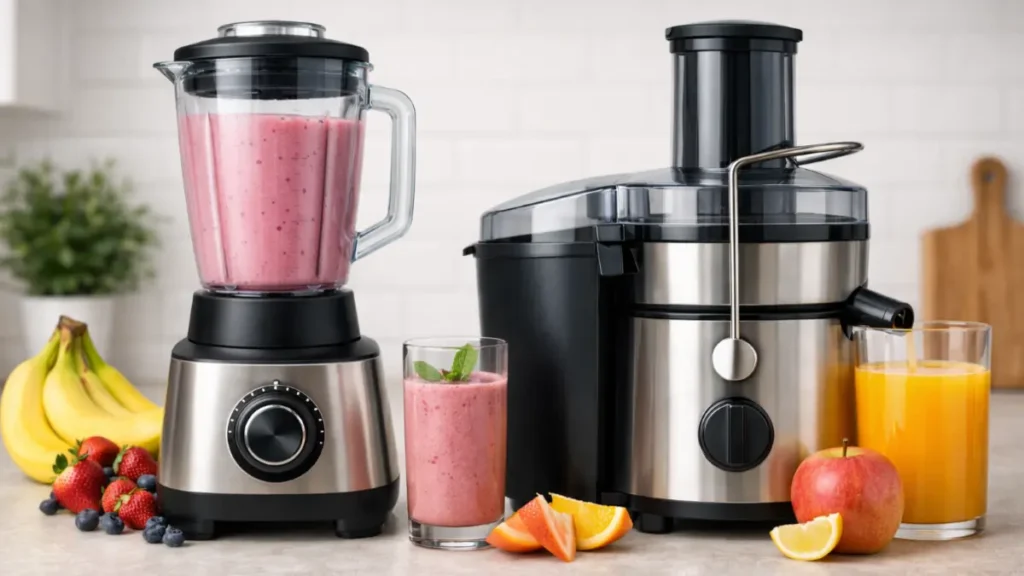
Blenders and juicers are often grouped as “healthy kitchen appliances,” but they work in very different ways and serve different lifestyle goals. Choosing the wrong one can lead to wasted ingredients, extra cleanup, or a machine that doesn’t match your actual eating and drinking habits.
In this guide, we’ll clearly explain the difference between a blender and a juicer, what each appliance does best, and how to decide which one fits your daily routine, health goals, and kitchen habits. Whether you’re focused on smoothies, juices, or whole-food nutrition, this comparison will help you make the right choice.
Blender vs Juicer at a Glance
| Feature | Blender | Juicer |
|---|---|---|
| Best for | Smoothies, shakes, soups | Fresh juices |
| Output texture | Thick, smooth | Thin, liquid |
| Fiber content | Retained | Removed |
| Ingredients used | Whole fruits & vegetables | Juice only (pulp discarded) |
| Waste | Minimal | High (pulp waste) |
| Cleaning effort | Moderate | Higher |
| Versatility | High | Limited |
Quick takeaway:
A blender preserves the whole ingredient, including fiber, while a juicer extracts only the liquid, discarding pulp and solids.
What Is a Blender Best Used For?
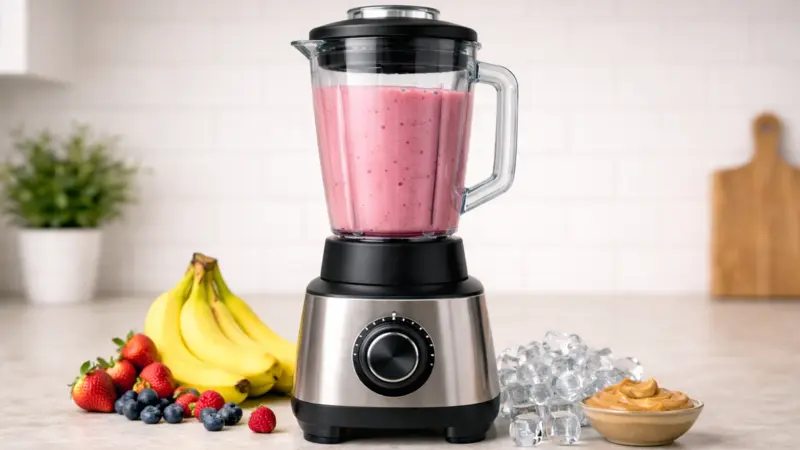
A blender is designed to process whole ingredients, combining fruits, vegetables, liquids, and even frozen items into a smooth, drinkable texture. Because everything goes into the jar and stays there, blenders preserve fiber and nutrients, making them a popular choice for everyday healthy drinks.
Blenders are best for:
- Smoothies and protein shakes
- Frozen fruit and ice-based drinks
- Blended soups and sauces
- Nut butters, dips, and purees
Blenders are especially useful for people who prefer quick, filling drinks that keep them satisfied longer, thanks to the retained fiber.
Limitations of blenders:
- Drinks can be thicker than juice
- Not ideal for clear, pulp-free beverages
- Texture may be too dense for some users
For most households, blenders offer greater versatility because they can handle both drinks and light food prep tasks.
If smoothies are a regular part of your routine, our guide to best blenders for smoothies explores models designed for smooth, consistent results.
What Is a Juicer Best Used For?
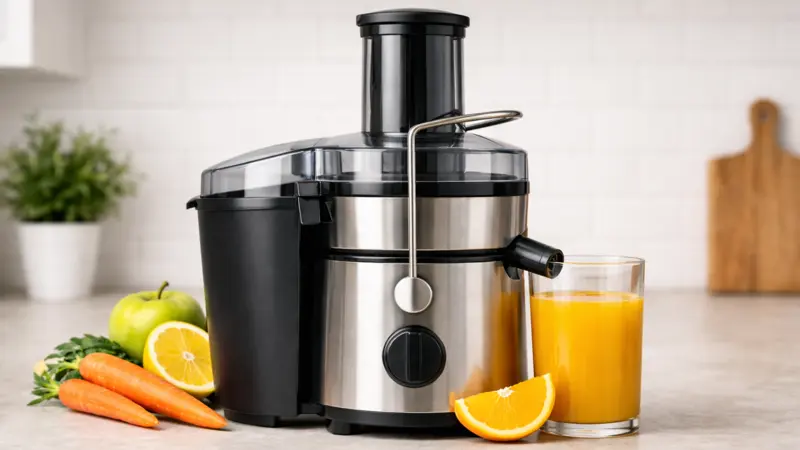
A juicer is designed to extract liquid from fruits and vegetables while separating and discarding the pulp. This process produces a thin, smooth juice that’s easy to drink and quick to digest. Juicers are often chosen by people who prefer clear juices or follow juice-focused routines.
Juicers are best for:
- Fresh fruit and vegetable juices
- Low-fiber, easy-to-drink beverages
- Juice cleanses or short-term detox plans
- Concentrated vitamin and mineral intake
Because juicers remove fiber, the resulting drink is lighter and can be consumed quickly, which some people prefer—especially first thing in the morning.
Limitations of juicers:
- Pulp and fiber are discarded, creating waste
- More ingredients are needed for a single serving
- Cleanup can take longer due to multiple parts
- Limited versatility beyond juicing
Juicers are less flexible than blenders and are typically used for one specific purpose: making juice.
Bottom line: If your goal is fresh, pulp-free juice and you’re comfortable with extra prep and cleanup, a juicer may suit your needs.
Key Differences Between a Blender and a Juicer
Although blenders and juicers are both used to make drinks, they differ significantly in how they process ingredients and what the final result looks like. Understanding these differences will help you choose the appliance that best fits your health goals and daily habits.
Nutrition & Fiber
- Blender: Keeps the entire ingredient intact, including fiber. This helps slow digestion, supports gut health, and keeps you feeling full longer.
- Juicer: Removes fiber during the extraction process. The result is a lighter drink that’s absorbed more quickly but less filling.
If fiber is important to you, a blender is the better choice.
Texture & Output
- Blender: Produces thick, smooth drinks such as smoothies, shakes, and blended soups.
- Juicer: Produces thin, clear juice with no pulp.
Texture preference plays a big role in deciding between the two.
Waste & Efficiency
- Blender: Uses the whole ingredient, resulting in minimal waste.
- Juicer: Discards pulp, which increases food waste and requires more produce per serving.
Blenders tend to be more economical for everyday use.
Cleaning & Maintenance
- Blender: Fewer parts, usually quicker to rinse or clean.
- Juicer: More components, including filters and pulp containers, which take longer to clean.
Cleanup time is an important consideration for daily use.
Cost & Long-Term Use
- Blender: Generally more affordable and versatile for multiple recipes.
- Juicer: Often more expensive and limited to juicing only.
For most households, blenders offer better long-term value.
Blender vs Juicer for Smoothies
When it comes to smoothies, a blender is the clear winner.
Blenders are specifically designed to process whole fruits and vegetables, including skins, seeds, and fiber. This allows them to create thick, filling smoothies that retain all the nutrients of the ingredients. Frozen fruits, leafy greens, nut butters, and protein powders all blend well when enough liquid is added.
Juicers, on the other hand, are not suitable for smoothies. They extract only the liquid portion of fruits and vegetables and discard the pulp, which means you end up with juice rather than a blended drink. This results in a thinner beverage that lacks fiber and the texture most people expect from a smoothie.
Short answer:
If smoothies are your primary goal, choose a blender, not a juicer.
For compact and everyday smoothie options, our guide to best personal blenders covers models designed specifically for single-serve and home use.
Blender vs Juicer for Daily Health Goals
Both blenders and juicers can support a healthy lifestyle, but they do so in different ways, depending on your nutritional priorities and eating habits.
When a blender makes more sense
Blenders retain fiber, which plays a key role in digestion, blood sugar control, and long-term satiety. This makes blended drinks more filling and suitable as meal replacements or part of a balanced diet. Whole-food smoothies are often recommended for sustained energy and gut health.
Blenders also allow you to combine fruits, vegetables, proteins, seeds, and healthy fats into a single drink, making them more versatile for daily nutrition.
When a juicer may be preferable
Juicers create light, easy-to-digest juices with a concentrated dose of vitamins and minerals. Some people prefer juicing when they want a quick nutrient boost or have difficulty digesting fiber-heavy foods.
Juicing can be useful as an occasional supplement to a balanced diet, but it is generally not ideal as a long-term replacement for whole foods.
Key takeaway:
If your goal is overall nutrition and fullness, a blender is the better everyday choice. If you prefer light juices or short-term juice routines, a juicer may fit your needs.
Which One Should You Buy Based on Your Needs?
Choosing between a blender and a juicer depends on how you plan to use it daily, not just on health trends or marketing claims.
Choose a Blender if you:
- Make smoothies or shakes regularly
- Want to keep fiber in your diet
- Prefer filling, meal-style drinks
- Want one appliance for multiple tasks
Blenders are generally more practical for everyday use and fit well into most home kitchens.
Choose a Juicer if you:
- Prefer clear, pulp-free juices
- Want light, easy-to-drink beverages
- Follow occasional juice routines
- Don’t mind extra prep and cleanup
Juicers work best for users committed specifically to juicing.
Still unsure?
If you’re debating between blending and other kitchen appliances, our comparison guide on blender vs food processor explains how blenders differ from other prep-focused tools and may help clarify your choice further.
Frequently Asked Questions
Is a blender or juicer better for smoothies?
A blender is better for smoothies because it blends whole fruits and vegetables, retaining fiber and creating a thick, filling texture. Juicers extract only liquid and cannot produce smoothie-style drinks.
Can a juicer replace a blender?
No, a juicer cannot fully replace a blender. Juicers are limited to extracting juice and cannot handle smoothies, soups, or blended recipes that require whole ingredients.
Is juicing healthier than blending?
Juicing is not necessarily healthier than blending. While juicing provides quick nutrient absorption, blending retains fiber, which supports digestion, blood sugar control, and long-term fullness.
Final Thoughts
Blenders and juicers serve different purposes, and choosing the right one depends on how you prefer to consume fruits and vegetables. A blender offers versatility, fiber retention, and everyday convenience, making it the better option for most households. Juicers, on the other hand, are best suited for those who specifically want light, pulp-free juices and don’t mind extra preparation and cleanup.
If you’re looking for an appliance that supports balanced nutrition and multiple recipes, a blender is usually the smarter long-term choice. If your focus is purely on fresh juice, a juicer may still have a place in your kitchen. Understanding these differences helps you invest in the appliance that truly matches your lifestyle.